
Vestiaire Collective
Authenticated pre-owned luxury fashion with a circular-fashion mission that banned fast fashion from its platform
Visit Vestiaire Collective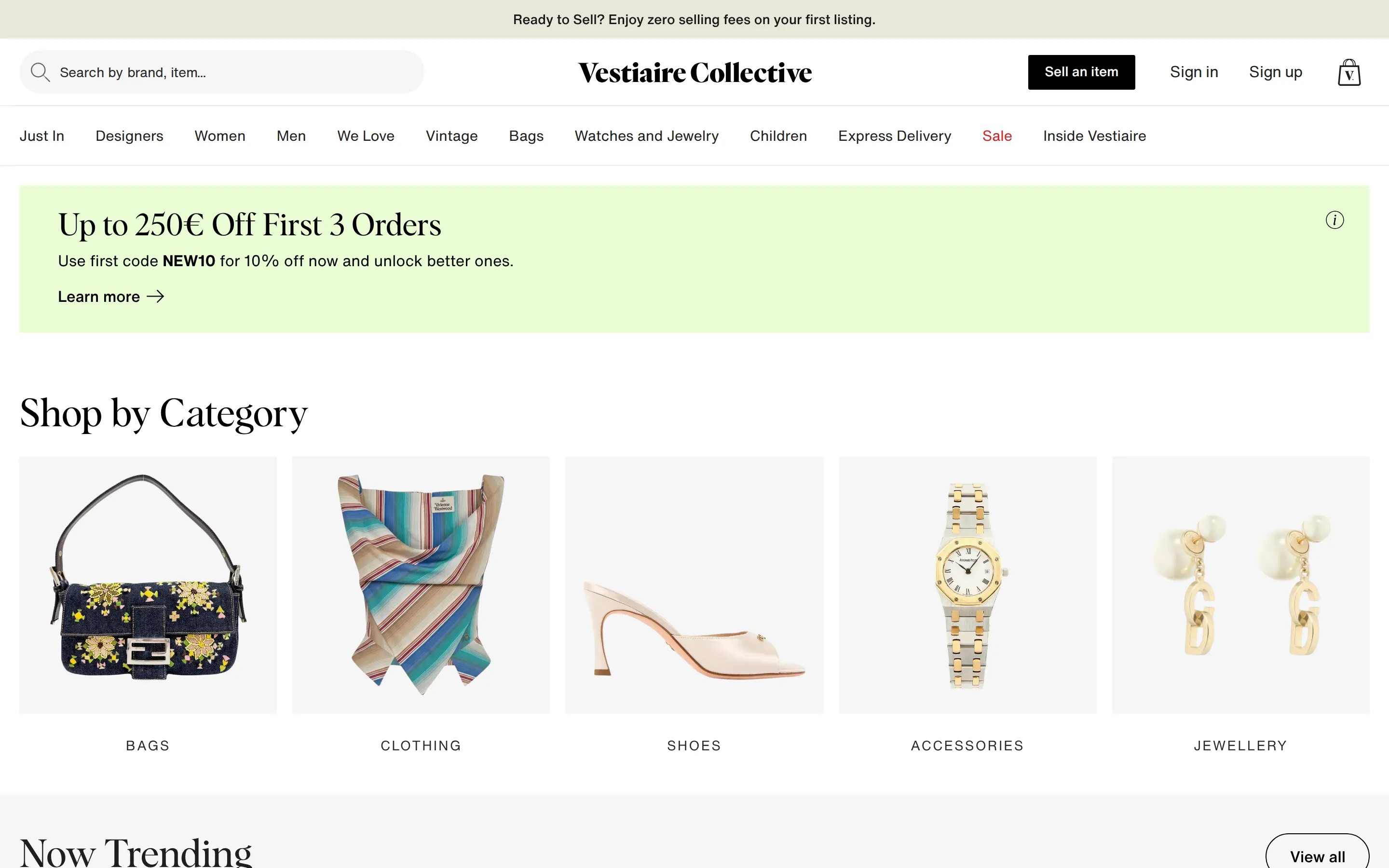
- Status
- Active
- Country
- FR
- Region
- France, Europe, United States, Asia-Pacific
- Category
- resale-recommerce
- Model
- C2C / B2C
- Founded
- 2009
- Website
- vestiairecollective.com
- Headquarters
- Paris, France
- Parent
- —
- GMV (USD/yr)
- $1.1B/yr est
Screenshots
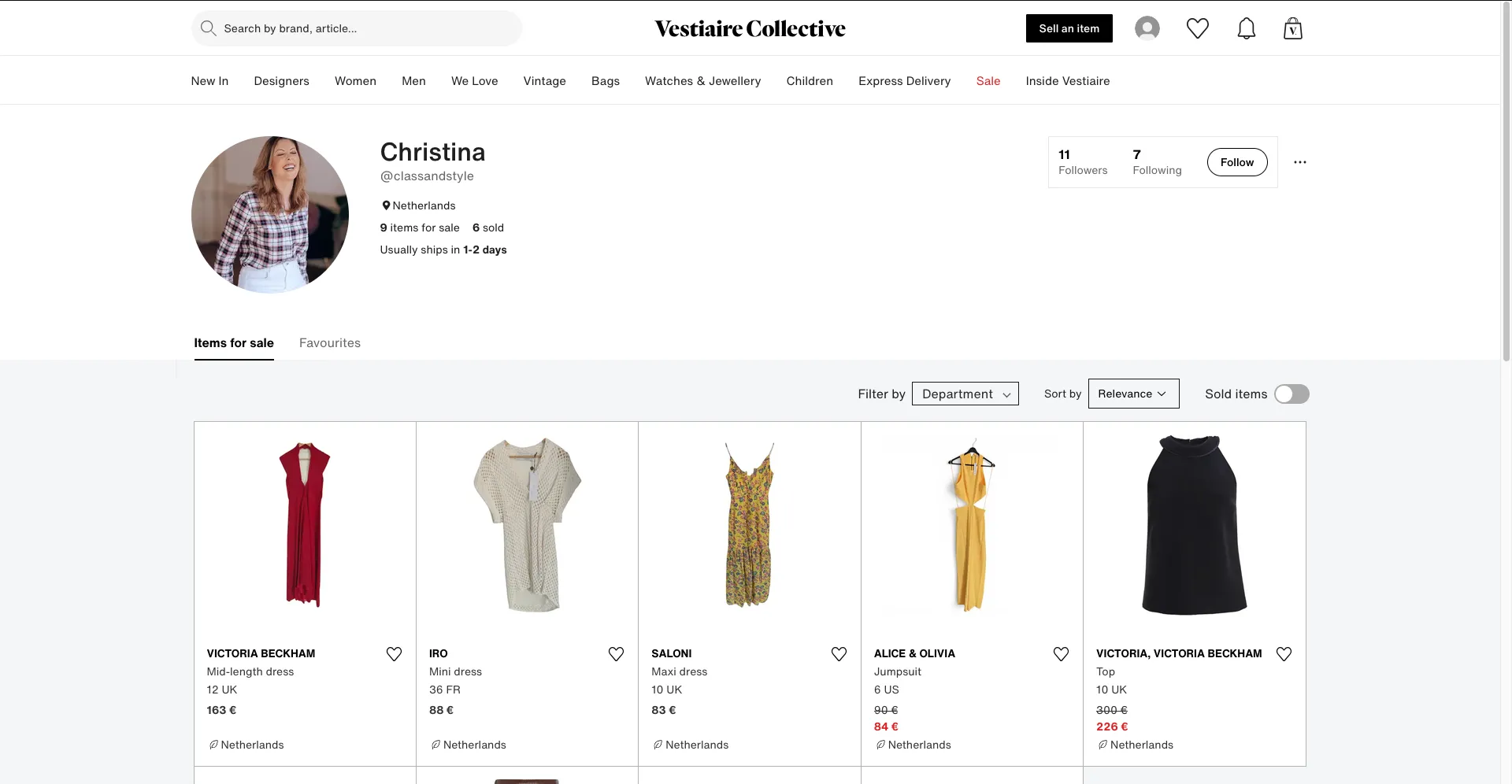
Overview
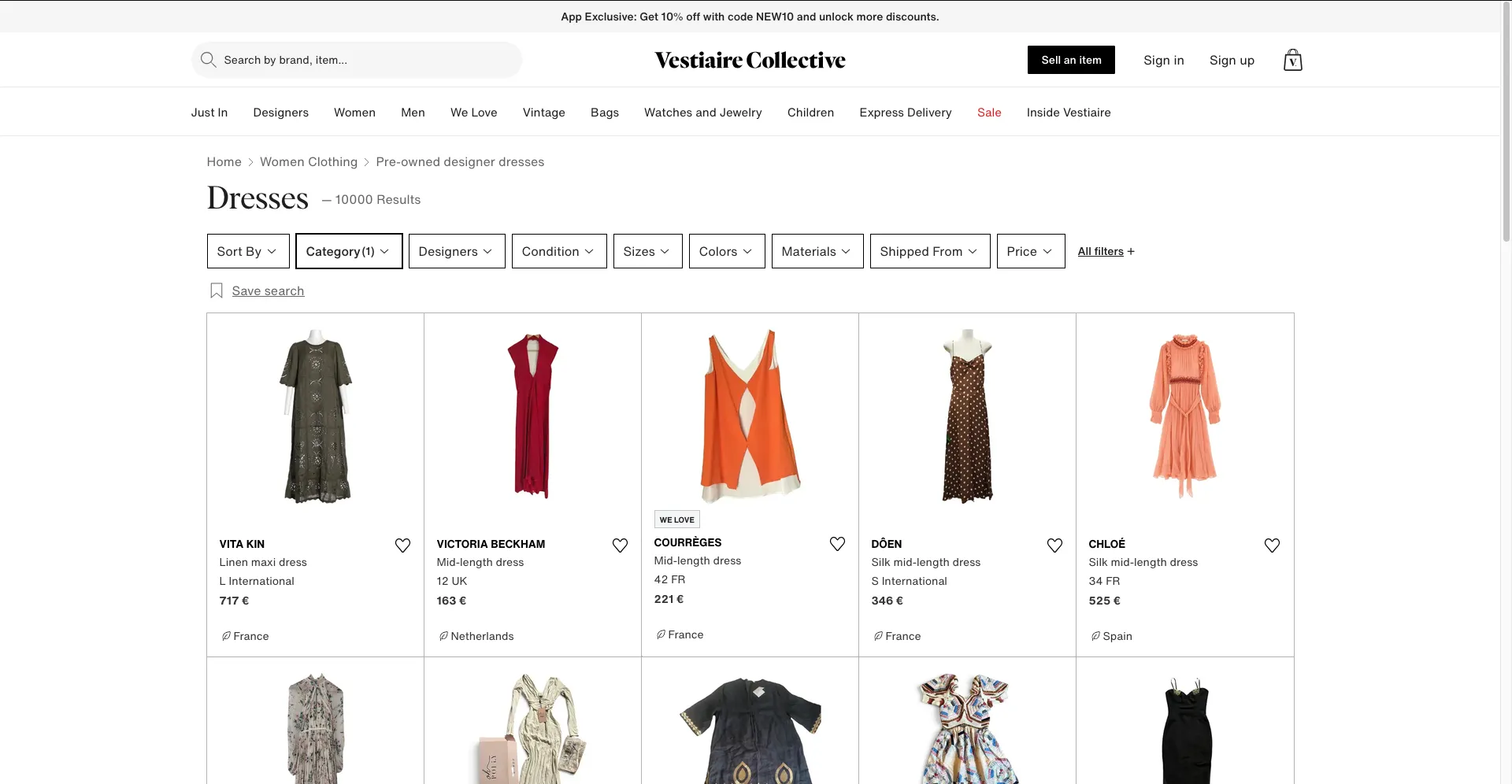
Vestiaire Collective is a Paris-founded global online marketplace for pre-owned luxury and premium fashion. Launched in 2009 as “Vestiaire de Copines” by six co-founders (including Fanny Moizant and Sophie Hersan), it connects individual sellers and buyers of secondhand designer clothing, bags, and accessories across more than 70 countries. It reached unicorn status (a valuation above $1 billion) in March 2021 and is one of Europe’s flagship resale platforms, with roughly 6 million curated items listed and tens of thousands of new listings added daily.
What they’re known for
Vestiaire Collective is distinctively known for two things: its physical authentication service and its circular-fashion activism. Items above a price threshold are routed through the company’s authentication centers, where experts physically inspect materials, hardware, stitching, labels, and serial numbers before the buyer receives them — a trust layer built into the buyer service fee. On the mission side, the company made global headlines by becoming the first major resale marketplace to ban fast fashion: it removed brands such as Shein, Boohoo, PrettyLittleThing and ASOS in a first wave (Nov 2022), then a second wave of ~30 mainstream brands including H&M, Zara, Mango, Uniqlo and Gap, as part of a multi-year rollout tied to a “think first, buy second” philosophy.
History
- 2009 — Founded in Paris as “Vestiaire de Copines” by six co-founders; launches with ~3,000 pre-owned items from friends and family.
- 2012 — Rebrands to “Vestiaire Collective”; begins international expansion (UK).
- 2014 — Launches in the United States.
- 2017 — Expands into the Asia-Pacific region.
- 2018 — Maximilian (Max) Bittner joins as CEO.
- Nov 2022 — Announces first wave of fast-fashion brand bans (Shein, Boohoo, ASOS, PrettyLittleThing and others).
- March 2021 — Raises €178M ($216M), led by Kering and Tiger Global Management, reaching unicorn status; Kering takes a ~5% stake.
- Dec 2023 — Announces second wave of the fast-fashion ban, removing ~30 brands including H&M, Zara, Mango and Uniqlo.
- 2024–2025 — GMV approaches €1 billion; company posts positive EBITDA over the holiday season and targets its first full-year profit in 2026.
- Oct 2025 — CEO Max Bittner exits; CFO Bernard Osta is promoted to CEO to lead a US/Europe/Asia growth and AI-authentication push.
Business model
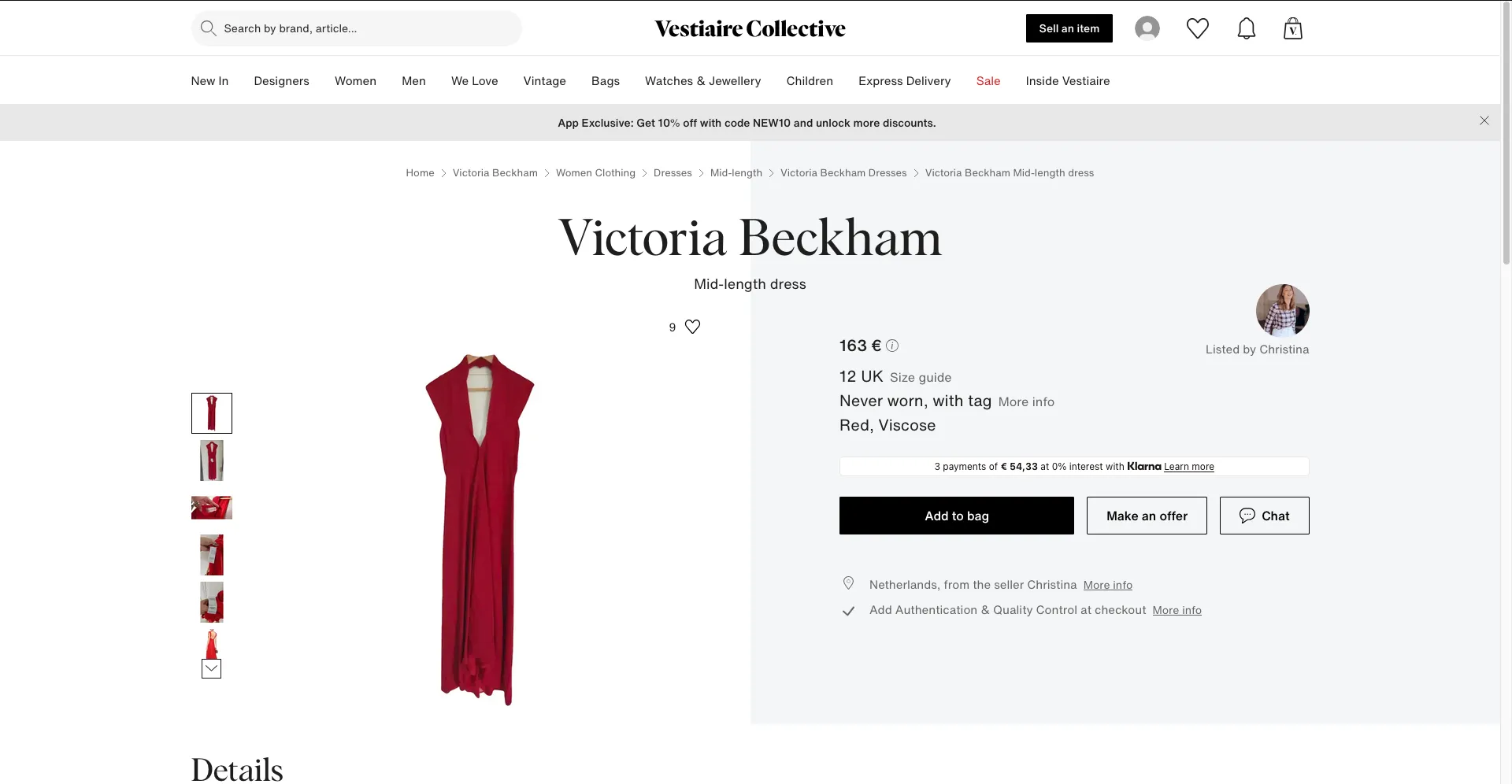
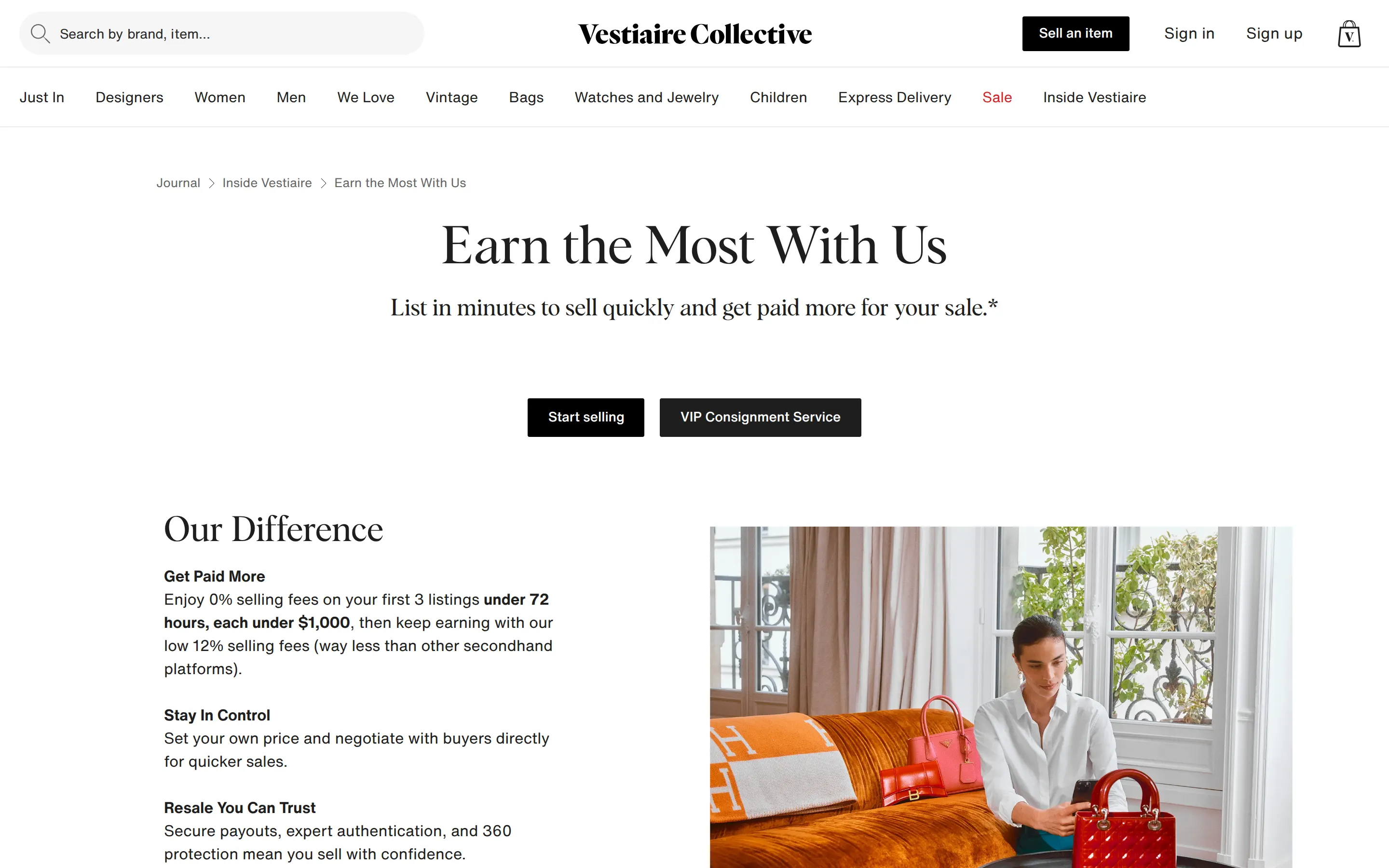
Vestiaire Collective is primarily a third-party (C2C) marketplace: private individuals (and professional/“trader” sellers) list items, and the platform earns money on each completed transaction rather than owning inventory. Revenue comes from a seller commission plus a buyer service fee. Sellers pay a tiered commission (roughly 25% in the core mid-price band, a flat fee on low-price items, and lower percentages on high-value items); in 2023 the company cut its own commission by ~10% across brackets to stimulate supply and demand, and reported that lower-price-point sales tripled afterward. Buyers pay a buyer service fee that typically ranges from about 5% to 28% of the item price (covering authentication, buyer protection, and support), plus shipping. A “Direct Shipping” option lets lower-value items ship straight from seller to buyer, bypassing the physical authentication step to cut cost and delivery time.
Why it succeeded
Vestiaire Collective’s rise rests on trust and brand positioning in the high-value end of resale. By building a physical authentication operation and 360° buyer/seller protection, it reduced the counterfeit and fraud risk that plagues secondhand luxury, letting buyers spend confidently on four- and five-figure items (FAQ: Buyer Service Fee). Its circular-fashion mission and fast-fashion ban turned sustainability into a marketing moat and free press, reinforcing a premium, values-driven brand rather than a bargain-bin image (PRNewswire, Forbes). Deep-pocketed backers — Kering, Tiger Global, SoftBank, Condé Nast — funded international expansion and the unicorn round (TechCrunch, GlobeNewswire). That said, success remains qualified: after 15+ years the company only reached positive holiday-season EBITDA and is targeting its first annual profit in 2026, amid a CEO change and headcount reductions — so its story is one of category leadership still working toward sustainable profitability (FashionUnited).
Notable facts
- Reached unicorn status in March 2021 via a €178M ($216M) round led by Kering and Tiger Global; Kering holds ~5%.
- GMV approached €1 billion in 2024–2025, translating into roughly €200M in revenue with margins reportedly above 50%.
- Operates in 70+ countries with about 6 million curated items and ~30,000 new listings added daily.
- Banned ~30 fast-fashion brands (H&M, Zara, Mango, Uniqlo, Gap, plus earlier Shein, Boohoo, ASOS, PrettyLittleThing), citing ~92 million tons of annual textile waste.
- Cut its own seller commission by ~10% in 2023; lower-price-point sales subsequently tripled.
- The US market is ~20% of revenue, with an average basket value around $500 — flagged as the biggest future growth driver.
- Long-time CEO Max Bittner exited in October 2025; CFO Bernard Osta became CEO.
Links
| Title | URL | Type | Note |
|---|---|---|---|
| Buyer: What is the Buyer Service Fee? – Help Center | https://faq.vestiairecollective.com/hc/en-us/articles/18378951869585-Buyer-What-is-the-Buyer-Service-Fee | official-site | Official help-center page (homepage bot-blocks automated fetch; see website in frontmatter) |
| Vestiaire Collective — Wikipedia | https://en.wikipedia.org/wiki/Vestiaire_Collective | article | Company history, founders, funding, and business model overview |
| Vestiaire Collective Bans Industry Giants From Platform (second wave) | https://www.prnewswire.com/news-releases/vestiaire-collective-bans-industry-giants-from-platform-in-a-second-wave-of-the-fight-against-fast-fashion-301992220.html | news | Press release detailing the ~30-brand fast-fashion ban |
| Vestiaire Collective Is Banning Fast Fashion From Its Platform | https://www.forbes.com/sites/sharonedelson/2022/11/27/the-vestiaire-collective-is-banning-fast-fashion-from-its-platform/ | article | Forbes coverage of the first-wave fast-fashion ban |
| Vestiaire Collective raises $216 million for its second-hand fashion platform | https://techcrunch.com/2021/03/02/vestiaire-collective-raises-216-million-for-its-second-hand-fashion-platform | news | Unicorn funding round, valuation, and investors |
| KERING – Vestiaire Collective announces a new financing round | https://www.globenewswire.com/news-release/2021/03/01/2184561/0/en/KERING-Vestiaire-Collective-announces-a-new-financing-round-backed-by-Kering-and-Tiger-Global-Management.html | news | Official Kering/Tiger Global €178M round announcement |
| French resale platform Vestiaire Collective’s €178M funding round | https://siliconcanals.com/vestiaire-collectives-raises-178m/ | article | Funding and unicorn-status context |
| Vestiaire Collective lowered its own commission to drive up sales | https://www.glossy.co/fashion/resale-platform-vestiaire-collective-lowered-its-own-commission-to-drive-up-sales/ | article | Commission/fee structure and 2023 rate cut |
| Vestiaire Collective eyes profitability in 2026 ahead of US expansion push | https://fashionunited.uk/news/business/vestiaire-collective-eyes-profitability-in-2026-ahead-of-us-expansion-push/2026020586149 | news | GMV, revenue, EBITDA, and US growth strategy |
| The People: CEO Maximilian Bittner leaves Vestiaire Collective | https://www.the-spin-off.com/news/stories/The-People-CEO-Maximilian-Bittner-leaves-Vestiaire-Collective-19355 | news | 2025 leadership change from Bittner to Osta |
Build the next Vestiaire Collective
Vestiaire Collective started as one idea. Turn your Shopify store into a multi-vendor marketplace and let many sellers list, sell, and ship — you take a commission on every order. Book a call and we'll walk you through it.
Book a meetingBook a meeting with us
Schedule a free consultation to discuss your marketplace project and see how Garnet can help you launch and scale.
Our calls are available in English and French.
Or write us an email directly at contact@nospam.garnetmarketplace.com.invalid
