
Snapdeal
Value-focused horizontal marketplace for non-metro India; once a top-3 Indian e-commerce player that collapsed after a failed Flipkart merger
Visit Snapdeal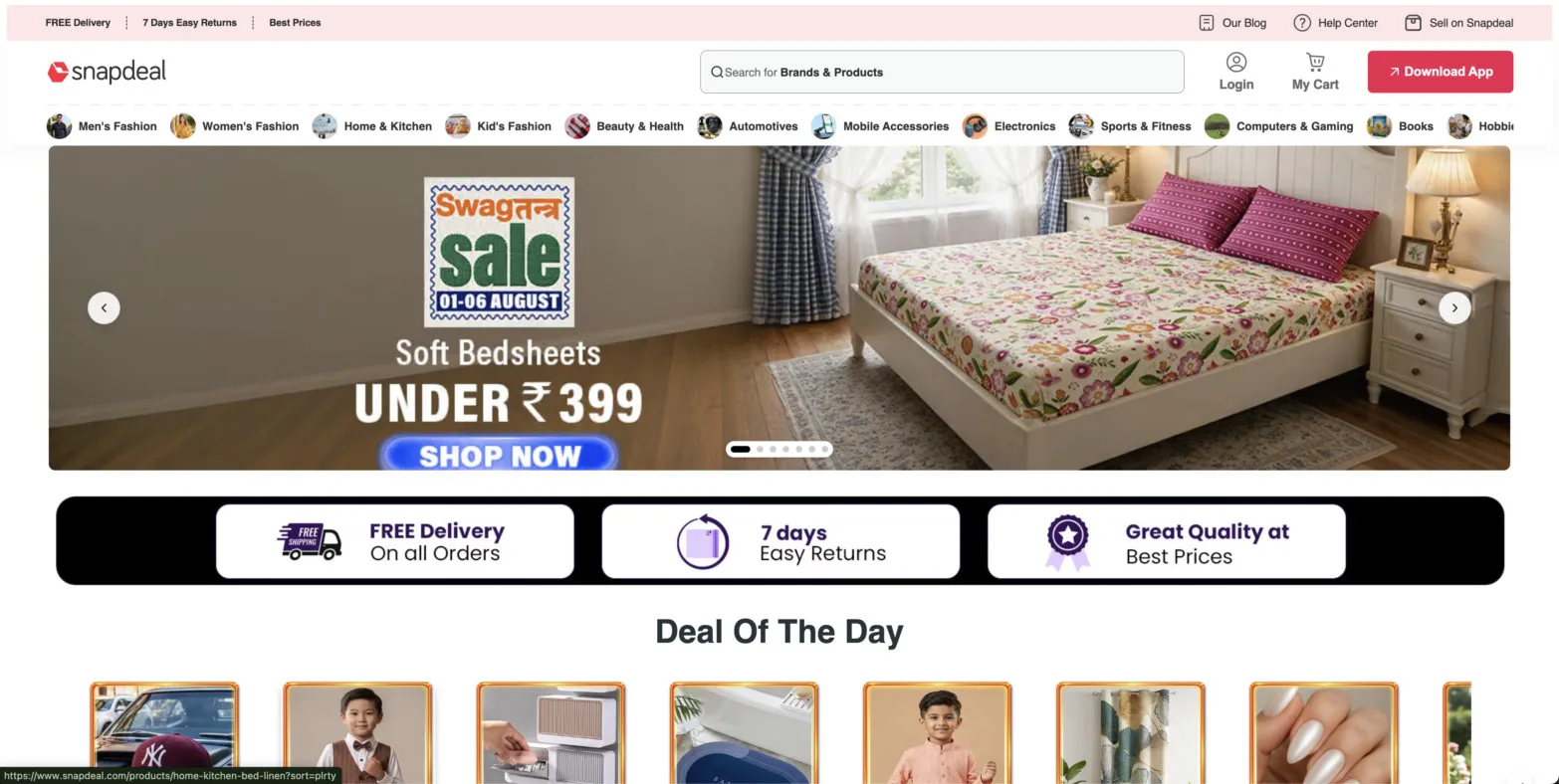
- Status
- Struggling
- Country
- IN
- Region
- India
- Category
- horizontal-b2c
- Model
- B2C
- Founded
- 2010
- Died
- still trading
- Headquarters
- New Delhi, India
- Parent
- AceVector Group
- GMV (USD/yr)
- $45M/yr est
Screenshots


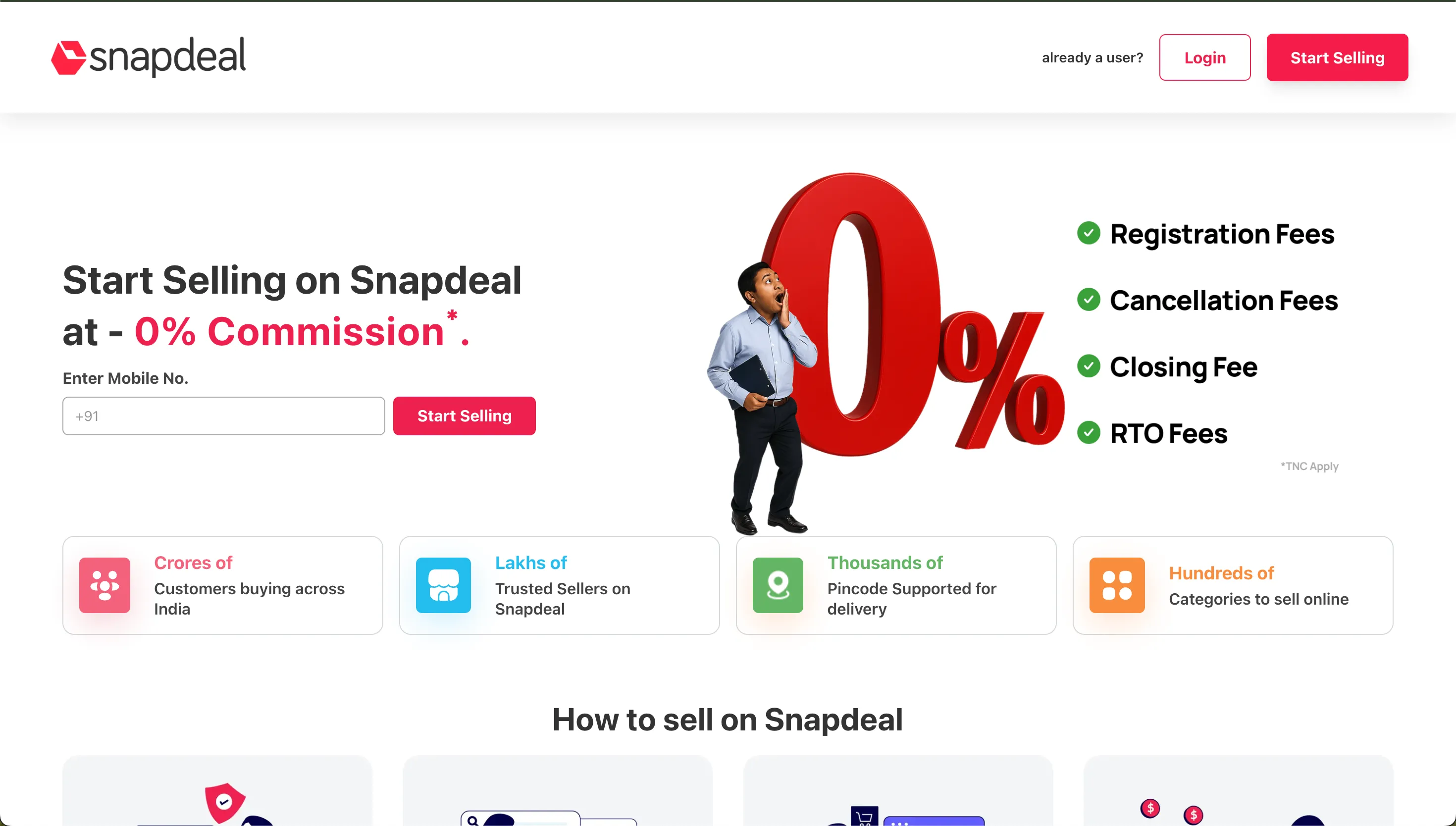
Overview
Snapdeal is an Indian online marketplace headquartered in New Delhi, founded in February 2010 by Kunal Bahl and Rohit Bansal. It began as a daily-deals and physical coupon business (MoneySaver) before pivoting in 2011 to a third-party e-commerce marketplace inspired by Alibaba. Backed heavily by SoftBank, Alibaba, and Foxconn, Snapdeal rose to become one of India’s top-three e-commerce platforms and reached a peak valuation of $6.5 billion in February 2016. It then collapsed almost as fast as it rose, rejecting a ~$950M acquisition by rival Flipkart in 2017 and shrinking into a niche “value commerce” survivor now operating under parent AceVector Group.
What they’re known for
Snapdeal is best known for two things. First, its dramatic rise-and-fall arc: it is one of the most-cited cautionary tales of the Indian startup boom, going from a $6.5B unicorn and Amazon/Flipkart rival to a business that laid off ~80% of its staff and saw market share crater from roughly 25% to ~4%. Second, its post-crash reinvention as “Snapdeal 2.0” — a deliberately lean, value-focused marketplace targeting non-branded, affordable fashion and lifestyle goods for tier-2/tier-3 towns and “Bharat” (non-metro India), a segment later dominated by Meesho.
History
- 2010 — Founded by Kunal Bahl and Rohit Bansal in New Delhi as a daily-deals/coupon site (MoneySaver).
- 2011 — Pivots to an online marketplace model after a trip to China; raises $12M (Nexus, Indo-US Venture Partners).
- 2014 — Raises $647M led by SoftBank, which becomes the largest shareholder.
- 2015 — Raises ~$500M from Alibaba, Foxconn, and SoftBank; acquires FreeCharge for ~$400M.
- Feb 2016 — Raises $200M at a peak valuation of $6.5 billion.
- FY2016 — Losses more than double to ₹3,316 Cr as revenue growth slows sharply.
- 2017 — Merger talks with Flipkart (~$950M offer) collapse in July; sells FreeCharge to Axis Bank for ~$60M; lays off ~80% of workforce; launches “Snapdeal 2.0.”
- 2021 — Files a DRHP for an IPO (fresh issue ₹1,250 Cr).
- 2022 — Shelves the IPO amid the tech-stock retreat.
- 2024 — Subsidiary Unicommerce lists publicly (Aug 2024); FY24 losses narrow further.
- 2025 — Achint Setia appointed CEO (Jan 2025); parent restructured as AceVector Group.
Business model
Snapdeal is a pure third-party (3P) B2C marketplace: it does not own inventory but connects independent sellers to buyers. Revenue comes primarily from seller commissions (rate varies by category), plus listing fees, advertising/promotion fees, and logistics/fulfillment services. During its growth phase it burned cash aggressively on discounting and marketing to buy market share. Post-2017, “Snapdeal 2.0” recentered the model on unbranded value goods and non-metro buyers, cutting marketing spend hard to chase unit economics and a path to profitability.
Why it failed
Snapdeal’s decline is a textbook case of a well-funded marketplace losing a capital war while spreading itself too thin:
- Out-funded by deeper-pocketed rivals. Amazon committed ~$5B to India and Flipkart raised ~$3.15B, dwarfing Snapdeal’s ~$1.8B total. It could not sustain the deep-discount campaigns needed to keep pace (per the unlistedzone post-mortem).
- Unsustainable cash burn. FY2016 losses more than doubled to ₹3,316 Cr even as revenue growth collapsed from ~450% to ~56%, alarming investors (per unlistedzone and YourStory).
- Over-diversification and value-destroying acquisitions. Buying FreeCharge (~$400M) and others drained resources; FreeCharge was later sold to Axis Bank for only ~$60M — a massive loss.
- A rejected exit that became a trap. Founders and minority shareholders walked away from Flipkart’s ~$950M offer in July 2017 over payout disputes, indemnity/non-compete clauses, and lack of shareholder consensus (Forbes, Inc42). The company then had to shrink alone, cutting ~80% of staff (Business Today).
- A painful, disorienting pivot. “Snapdeal 2.0” dropped high-value categories like smartphones, alienating existing customers, while the value segment it targeted was ultimately captured by newcomers like Meesho.
- Failed IPO attempts. A 2021 DRHP was shelved in 2022 amid weak tech valuations, cutting off public-market capital.
Notable facts
- Peak valuation of $6.5 billion in February 2016; the 2017 Flipkart offer valued it at only ~$1 billion.
- Market share fell from roughly 25% to ~4% during the decline.
- ~80% of the workforce was laid off in 2017 (roughly 1,000 of ~1,200 employees).
- FreeCharge: bought for ~$400M (2015), sold for ~$60M (2017).
- FY23: net loss narrowed to ₹282.2 Cr (from ₹510.3 Cr) while operating revenue fell 31% to ₹372 Cr.
- Backed by SoftBank (largest shareholder), Alibaba, and Foxconn; raised over $1.7B in total.
- Official positioning today: “India’s leading pure-play value e-commerce platform,” serving 100M+ shoppers over 14+ years.
Links
| Title | URL | Type | Note |
|---|---|---|---|
| Snapdeal - Wikipedia | https://en.wikipedia.org/wiki/Snapdeal | article | Founding, funding rounds, $6.5B peak, merger collapse |
| About Us: Snapdeal.com - India’s Largest Online Marketplace | https://m.snapdeal.com/page/about-us | official-site | Official self-description as a value e-commerce platform |
| Merger Between Flipkart And Snapdeal Called Off (Forbes) | https://www.forbes.com/sites/leezamangaldas/2017/08/01/merger-between-indian-e-commerce-heavyweights-flipkart-and-snapdeal-called-off/ | news | Details the terminated ~$950M merger and its causes |
| It’s A No Deal: Snapdeal-Flipkart Merger Falls Through (Inc42) | https://inc42.com/buzz/snapdeal-flipkart-merger/ | news | Minority-shareholder and founder opposition to the deal |
| Snapdeal Narrows Loss To INR 282.2 Cr in FY23 (Inc42) | https://inc42.com/buzz/snapdeals-fy23-loss-narrows-to-inr-282-2-cr-sales-drop-31-yoy/ | news | FY23 financials: loss narrows, revenue drops 31% |
| After merger fails, Snapdeal may lay off 80% workforce (Business Today) | https://www.businesstoday.in/latest/corporate/story/flipkart-snapdeal-merger-fail-layoffs-job-cuts-85025-2017-07-31 | news | ~80% layoffs and FreeCharge sale after the failed deal |
| From $6.5 Billion Unicorn to Survival Mode (UnlistedZone) | https://unlistedzone.com/from-65-billion-unicorn-to-survival-mode-the-untold-story-of-snapdeals-fall-from-grace | article | Detailed post-mortem: funding gap, burn, failed pivot |
| The real reason a Flipkart-Snapdeal merger did not materialize (IndiaRetailing) | https://www.indiaretailing.com/2017/08/14/real-reason-flipkart-snapdeal-merger-not-materialize | article | Analysis of why the merger collapsed |
| Snapdeal: Streamlining Ecommerce (StartupTalky) | https://startuptalky.com/snapdeal-success-story/ | article | History, business model, and financial performance |
| Indian e-commerce startup Snapdeal files for IPO (TechCrunch) | https://techcrunch.com/2021/12/20/snapdeal-ipo | news | 2021 IPO filing and non-metro strategy |
| Freecharge - Wikipedia | https://en.wikipedia.org/wiki/Freecharge | article | FreeCharge acquisition ( |
Build a marketplace that lasts
Snapdeal shows how quickly things can unravel. Turn your Shopify store into a multi-vendor marketplace with Garnet — many sellers, one storefront, and a commission on every order. Book a call and we'll walk you through it.
Book a meetingBook a meeting with us
Schedule a free consultation to discuss your marketplace project and see how Garnet can help you launch and scale.
Our calls are available in English and French.
Or write us an email directly at contact@nospam.garnetmarketplace.com.invalid
