
Amazon
The "everything store" — the world's largest third-party marketplace powered by Fulfillment by Amazon (FBA) and Prime.
Visit Amazon
- Status
- Active
- Country
- US
- Region
- North America, Europe, Japan, India, Middle East, Australia, Brazil
- Category
- horizontal-b2c
- Model
- B2C / B2B / C2C
- Founded
- 1994
- Website
- amazon.com
- Headquarters
- Seattle, Washington, USA
- Parent
- —
- GMV (USD/yr)
- $638B/yr
Screenshots
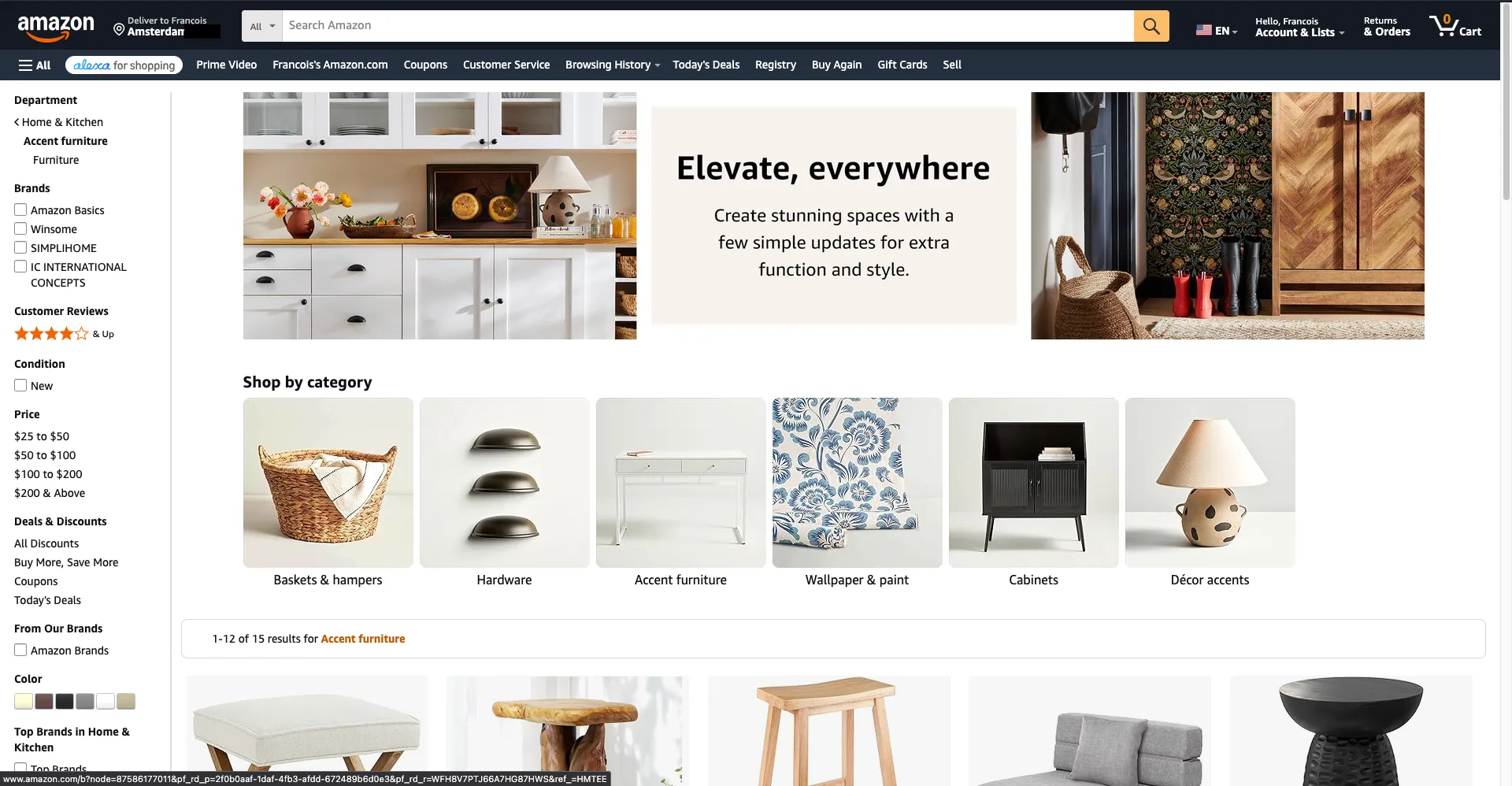
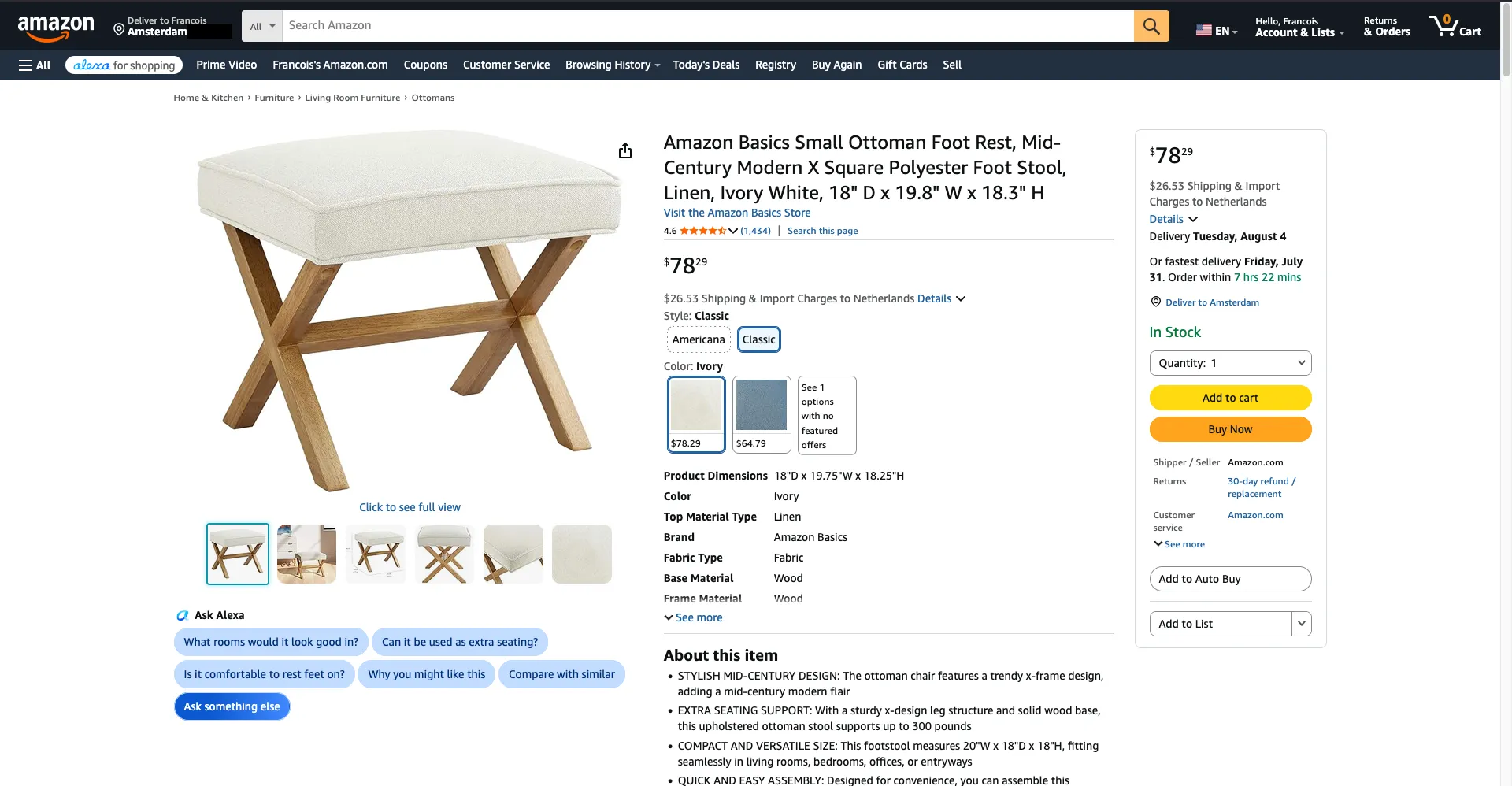
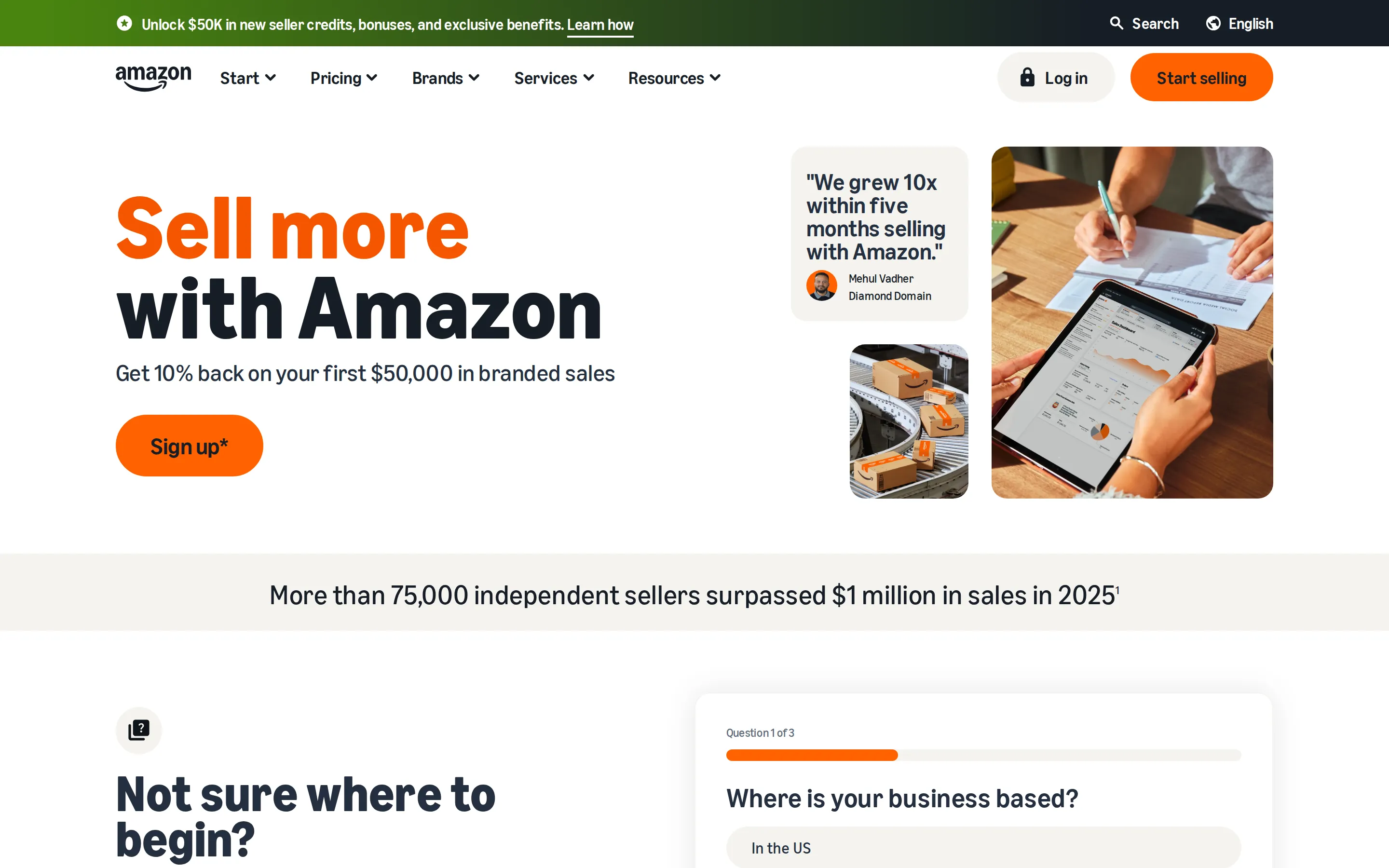
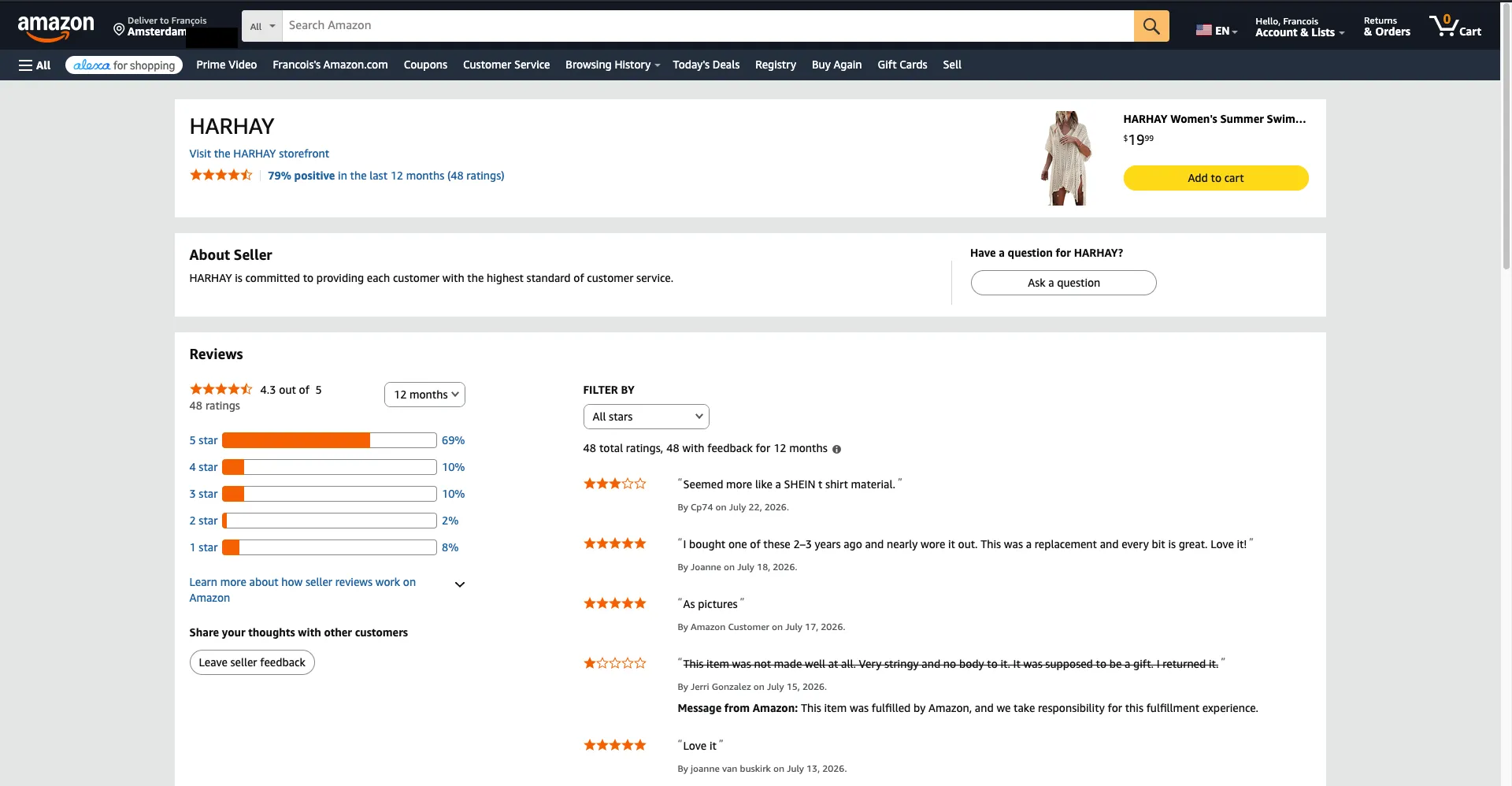
Overview
Amazon is an American multinational technology company and the world’s largest ecommerce marketplace. Founded by Jeff Bezos in 1994 as an online bookstore run out of a Bellevue, Washington garage, it has grown into “the everything store,” selling hundreds of millions of products across dozens of categories worldwide. Its retail business combines Amazon’s own first-party (1P) inventory with a vast third-party (3P) marketplace where independent sellers list, sell, and — increasingly — fulfill goods through Amazon’s logistics network. The company is headquartered in Seattle and operates dedicated marketplaces across North America, Europe, Japan, India, the Middle East, Australia, and Brazil.
What they’re known for
Amazon is distinctively known for turning a retail storefront into a fully integrated selling platform. Its signature combination is the third-party marketplace + Fulfillment by Amazon (FBA): independent sellers ship inventory into Amazon’s fulfillment centers, and Amazon handles storage, picking, packing, shipping, returns, and customer service. Paired with Amazon Prime (fast, “free” shipping plus streaming and other perks), this created a flywheel where more sellers bring more selection, which attracts more Prime members, which attracts more sellers. Third-party sellers now account for the majority of units sold on the platform — an all-time high of 62% in Q4 2024 — making Amazon far more a marketplace operator than a pure retailer.
History
- 1994 — Jeff Bezos founds the company (initially “Cadabra”) in Bellevue, Washington.
- 1995 — Amazon.com launches to the public as an online bookseller (July).
- 2000 — Launches Amazon Marketplace, opening its listings to third-party sellers alongside its own inventory.
- 2005 — Launches Amazon Prime: unlimited two-day shipping for a flat $79/year annual fee.
- 2006 — Launches Fulfillment by Amazon (FBA), letting third-party sellers use Amazon’s warehousing and fulfillment infrastructure. AWS also launches the same year.
- 2010s — Rapid international expansion, private-label brands, and the rise of advertising as a major revenue stream.
- 2024 — Total net sales reach $638.0 billion (up 11% YoY); third-party sellers hit a record 62% of units sold.
Business model
Amazon runs a hybrid retail model. As a first-party retailer, it buys inventory wholesale and resells it, booking the full sale as “online stores” revenue (~$247B in 2024). As a third-party marketplace operator, it charges sellers a stack of fees rather than owning the goods:
- Referral fees — a commission on each sale, typically around 15% but ranging from ~5% to 45% depending on category, with a $0.30 minimum per item.
- Fulfillment by Amazon (FBA) — per-unit fulfillment fees plus monthly inventory storage fees for sellers who use Amazon’s warehouses.
- Selling plan — a $39.99/month Professional plan (or $0.99/item for the Individual plan).
- Advertising — sponsored product and brand placements, now one of Amazon’s fastest-growing profit centers.
Together these seller services generated $156.1 billion in 2024 (about 24% of total revenue). Amazon’s broader profit engine is diversified: AWS ($107.6B in 2024) supplies the bulk of operating income, subsidizing thin retail margins.
Why it succeeded
- Selection flywheel — Opening the platform to third-party sellers (2000) and offering FBA (2006) let Amazon expand selection almost infinitely without carrying all the inventory risk, while still controlling the customer and logistics experience.
- Prime lock-in — Prime turned fast shipping into a subscription habit, raising purchase frequency and switching costs; it made Amazon the default first stop for online shopping.
- Logistics as a moat — By building out fulfillment centers and last-mile delivery, Amazon made FBA a service sellers depend on, capturing fulfillment economics and reinforcing Prime delivery speed.
- Platform economics — Shifting from pure 1P retail toward 3P + advertising raised marginal profitability: third-party sellers now drive 62% of units, and seller services plus ads monetize the marketplace without inventory cost.
- AWS cross-subsidy — High-margin cloud profits gave Amazon the financial room to run retail at thin margins and reinvest aggressively in price, selection, and logistics for years.
Notable facts
- Total net sales were $638.0 billion in 2024, up 11% from $574.8 billion in 2023.
- Third-party seller services brought in $156.1 billion in 2024, ~24% of total revenue.
- Third-party sellers reached an all-time high of 62% of units sold in Q4 2024, up from under one-third a decade earlier.
- Seller concentration is intense: fewer than ~8,000 sellers (about 1.6% of the active base) drive roughly half of Amazon’s estimated ~$300B U.S. third-party GMV.
- AWS generated $107.6 billion in 2024 revenue (up 19% YoY) and supplies most of Amazon’s operating income.
- Company operating income nearly doubled to $68.6 billion in 2024 (a 10.8% operating margin).
Links
| Title | URL | Type | Note |
|---|---|---|---|
| Amazon.com (official retail marketplace) | https://www.amazon.com | official-site | Primary consumer storefront |
| Amazon News (official corporate site) | https://www.aboutamazon.com/ | official-site | Corporate news and announcements |
| Sell on Amazon — Pricing | https://sell.amazon.com/pricing | official-site | Referral fees, selling plans, FBA costs |
| Amazon.com Announces Fourth Quarter Results (FY2024) | https://ir.aboutamazon.com/news-release/news-release-details/2025/Amazon-com-Announces-Fourth-Quarter-Results/ | report | Official FY2024 net sales ($638.0B) and AWS figures |
| Amazon (company) — Wikipedia | https://en.wikipedia.org/wiki/Amazon_(company) | article | Company overview, founding, HQ |
| History of Amazon — Wikipedia | https://en.wikipedia.org/wiki/History_of_Amazon | article | Prime (2005) and FBA (2006) launch timeline |
| Amazon recreated Bezos’s 1994 garage | https://www.aboutamazon.com/news/workplace/first-amazon-office-jeff-bezos-garage | article | Founding story, 1994/1995 origins |
| Amazon Steers Third-Party Seller Share To All-Time High | https://www.marketplacepulse.com/articles/amazon-steers-third-party-seller-share-to-all-time-high | article | 3P sellers = 62% of units sold (Q4 2024) |
| Top 1.6% of Sellers Drive 50% of Amazon’s 3P GMV | https://www.marketplacepulse.com/articles/top-16-of-sellers-drive-50-of-amazons-3p-gmv | article | Seller concentration and 3P GMV size |
| Amazon FBA Fees: How Much Does it Cost to Sell on Amazon | https://www.junglescout.com/resources/articles/amazon-fba-fees/ | article | Referral fee (~15%) and FBA fee breakdown |
Build the next Amazon
Amazon started as one idea. Turn your Shopify store into a multi-vendor marketplace and let many sellers list, sell, and ship — you take a commission on every order. Book a call and we'll walk you through it.
Book a meetingBook a meeting with us
Schedule a free consultation to discuss your marketplace project and see how Garnet can help you launch and scale.
Our calls are available in English and French.
Or write us an email directly at contact@nospam.garnetmarketplace.com.invalid
